-
call: +1(469)529-0316
Explore Our Dedicated Healthcare Recruitment Services
Conglomerate Healthcare Recruitment Services


Okay, so check this out—I’ve spent a lot of late nights staring at Solana blocks. Whoa! My instinct said this chain moves too fast to eyeball manually. Seriously? Yes. The pace is dizzying, and somethin’ about that first-time sync feels like drinking from a firehose.
First impressions were messy. I thought token IDs would be user-friendly. Initially I thought that the explorers would show everything neatly labeled, but then I realized labels are a community thing, not a blockchain promise. Actually, wait—let me rephrase that: explorers can surface labels, but their accuracy depends on off-chain contributions and heuristics. On one hand that decentralization appeals. On the other, it complicates audits, especially when tokens are forked or reissued.
Here’s the thing. Solana transactions are compact and fast. They bundle multiple instructions into single transactions. That makes tracing a single transfer sometimes feel like following a rabbit through a maze. My workflow evolved. First I open the transaction hash. Then I scan the inner instructions. Then I follow the token account changes. Simple in principle. Slightly annoying in practice.
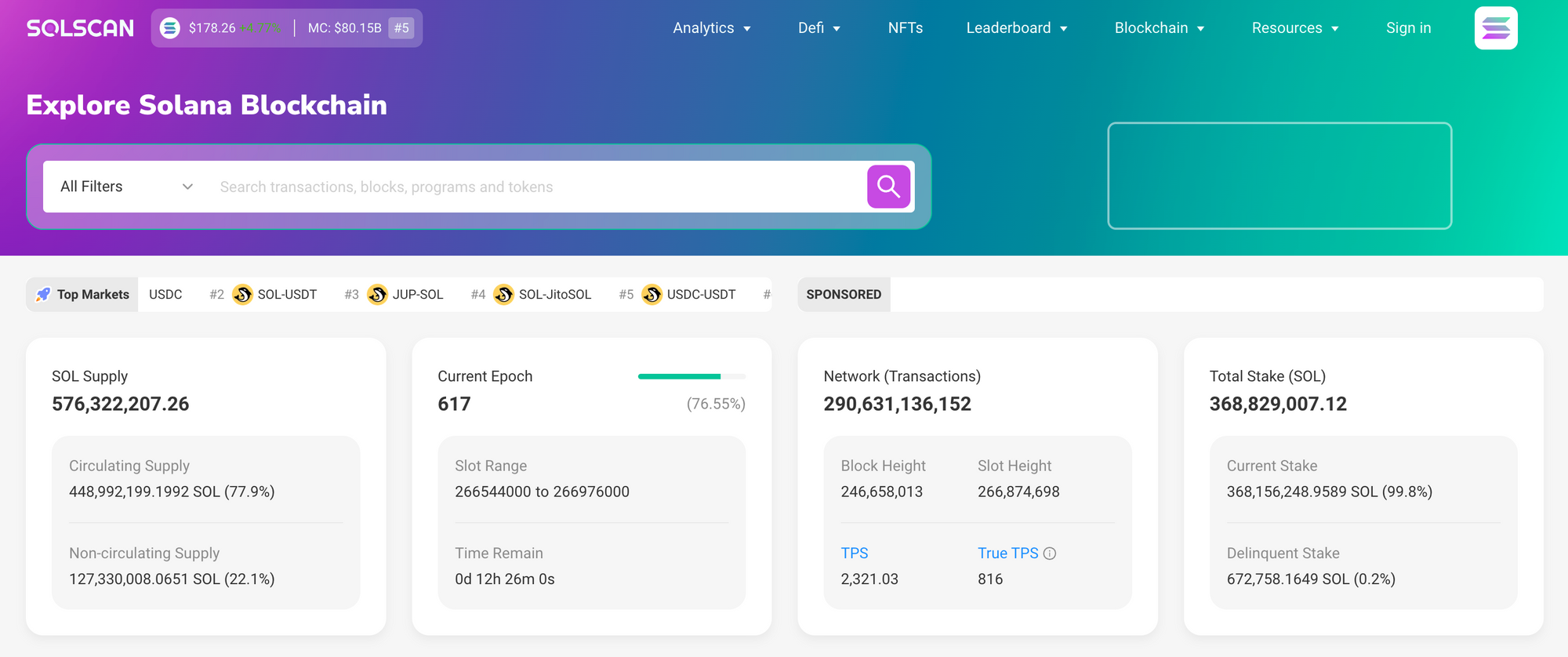
Why Solscan Stands Out for Token Tracking
I’ll be honest—I use a couple of explorers, but one keeps pulling me back. The interface balances raw data with readable labels. Fast filters let me isolate transfers, mint events, and token burns. It also surfaces associated accounts, program IDs, and the sometimes-cryptic runtime logs that actually tell the story of what happened in the transaction. Hmm… that log view has saved me more than once.
Check this out—if you want a single spot to check native SOL moves, token transfers, and NFT mints, I often go to the solscan explorer official site. The search bar is forgiving with bad input. It resolves addresses, txn hashes, and pretty often a token symbol. That symbol resolution is not perfect. Sometimes projects change their metadata or re-register tokens, and then things get messy. Still, it’s better than starting from raw base58 bytes every time.
Short tip: always cross-check token decimals and mint account. Very very important. If you miss decimals you misread balances by orders of magnitude. Trust me—I’ve been burned on that one. (oh, and by the way…) When you see a sudden massive transfer, check the token program’s account history and signatures. You want to know whether it’s a legitimate treasury move or a rug-prone dump.
Practical Steps for Tracing a SOL Transaction
Start with a clear question. Are you looking for where SOL moved? Or which token changed hands? The steps diverge. For pure SOL movement, follow balance deltas on the native account. For SPL tokens, follow token accounts and mint events. Don’t forget to inspect inner instructions; many times the sender is proxied through another program.
My go-to checklist:
- Paste the transaction hash in the search bar.
- Open execution logs and inner instructions.
- Note program IDs that appear (System, SPL Token, Metaplex, Serum, etc.).
- Trace associated token accounts and check owner addresses.
- Validate token decimals and metadata where available.
Sometimes the simplest answer is correct. Other times the path splits like a river. On those multi-instruction txns, you might see token swaps or liquidity pool moves bundled together. Initially I thought one transfer was suspicious. Then I noticed it was a swap followed by a deposit. That nuance changes the narrative.
Token Tracker Features to Leverage
Filters are underrated. Use them. Filter by program. Filter by instruction type. You can follow mints specifically, for example, to detect token inflation. The token tracker views often show holder distributions, which helps answer “who owns most of the supply?” That insight can be the difference between calm and panic when a whale moves tokens.
Also—alerts. I set tracking for a few addresses and token mints. They ping me when large moves happen. My email dings. My phone buzzes. Sometimes it’s noise. Sometimes it’s the one time a protocol ops team retires a multisig and moves funds. Alerts are your early-warning radar.
One more practical note: decode program logs whenever possible. Developers drop human-readable strings into logs. They might reveal a function name or intent. Those strings are gold when a transaction otherwise looks opaque.
FAQ
How do I verify a token’s authenticity?
Check the mint account, verify metadata via associated metadata programs, and compare contract source or documentation from the project’s repo or website. Also examine holder distribution and creation transactions to see if the token was minted in a suspiciously centralized way. If you want a quick check, open the token’s page on the explorer and scan the recent mint and transfer activity—fraud patterns often stand out.
What if a transaction includes multiple instructions?
Go step-by-step. Expand each instruction. Read the logs in order. Trace balance deltas after each instruction. Often a complex transaction is a composite of swaps, approvals, and deposits. Breaking it down keeps you from jumping to the wrong conclusion.
Can explorers detect malicious activity?
They can surface indicators but not certify intent. Look for unusual minting, concentration of supply, or repeated small deposits followed by a big withdrawal. If something smells off, cross-check with on-chain history and community resources. I’m biased toward caution, but sometimes patterns are false positives.


Leave A Comment