-
call: +1(469)529-0316
Explore Our Dedicated Healthcare Recruitment Services
Conglomerate Healthcare Recruitment Services

Aug
Why smart DeFi users track portfolios and block MEV — and how a better wallet changes the game

Whoa! I remember the first time I watched my gas spike mid-swap and felt that sick drop in my stomach. Really? Fees just tripled in thirty seconds. My instinct said something felt off about the route the transaction took, but I couldn’t prove it at the time. Initially I thought that was just bad timing, but then I started noticing patterns—bots front-running, sandwich attacks, priority gas auctions—and a lot of value quietly leaking out of ordinary trades. Okay, so check this out—portfolio tracking and MEV protection aren’t just for whales. They’re table stakes if you care about preserving yield and avoiding stealthy losses.
Short version: active DeFi users need visibility. Medium version: you need simulation, granular history, and tools that stop extraction before it happens. Longer thought: when your UI shows you what would have happened if a trade had been routed differently, you stop gambling and start optimizing, and that behavior compounds over months and years when you’re building a portfolio.
Why portfolio tracking is more than a vanity metric
I’m biased, but portfolio tracking is a radar for financial integrity. It tells you where profits live and where silent leaks occur. Most people check token prices and call it a day. That’s fine for a casual hodler. But if you trade, provide liquidity, or partake in leverage, then not tracking realized slippage, impermanent loss, and gas-savings across chains becomes very very expensive.
Think about it this way: one subtle sandwich attack costs you a fraction on a single trade. Over dozens of trades that fraction becomes a real dollar figure that eats your APY. On one hand, dashboards that only show USD balances are comforting. On the other hand, you need simulation-backed scenarios—what would have happened if the trade went through a different pool, or if the gas timing was delayed or accelerated—so you can actually measure the opportunity cost of each decision.
Initially I assumed portfolio trackers were just aggregators; but then I used tools that replayed my transactions and flagged MEV events, and I realized the tracking layer can be proactive, not just archival. Actually, wait—let me rephrase that: it can prevent rather than merely record damage. That changed how I moved assets between chains.
MEV: the subtle tax you never signed up for
MEV (miner/extractor value) is a feature of how blockchains order transactions. Hmm… sounds dry, but its effects are tangible. Front-running, back-running, and sandwiching are all MEV expressions. These aren’t theoretical attacks from shadowy hackers in basements; they’re automated bots competing for tiny profits on your trades. Seriously?
Here’s the thing. If you submit a swap without simulation, you give adversaries an easy blade to slice at spreads. Simulation shows how bots could insert themselves, and smart wallets can either change the route or opt to delay and resubmit under different gas parameters. My gut said “there has to be a better way,” and I found that protective behavior in wallets that simulate transactions.
On one level it’s about smart defaults—wallets that pick safer routes and surface realistic slippage. On another level it’s about agency; you deserve to see the actual worst-case and expected outcomes before signing. This isn’t hand-wringing. It’s practical risk management for anyone doing more than occasional swaps.
What to look for in a wallet: practical checklist
Short list first. Must-haves: transaction simulation, cross-chain portfolio view, clear slippage visibility, and MEV-aware routing. Medium list: nonce control, batching, and offline signing for big moves. Longer explanation: your wallet should simulate a transaction against pending mempool activity and historical patterns, show alternate routes with gas/time tradeoffs, and let you decide—without hidden defaults—how you want to proceed.
I’m not 100% sure there’s a single perfect product yet. But some are way ahead. One that I use regularly surfaces simulation results in plain language, shows who benefits from a transaction ordering, and offers safer alternatives when MEV exposure is detected. That kind of UX reduces mistakes and gives you choices.
Also—this bugs me—many wallets bury the simulation behind developer tooling or niche plugins. The power users get it, but mainstream users are left sign-and-pray. We can do better. Wallets should be the place where safety is default, not optional.
How simulation actually works (in plain English)
Simulation runs your intended transaction through a local or remote node against the current mempool and ledger state, and then it tries alternate orderings and routing to see outcomes. Medium complexity: it models slippage, price impact, gas fees, and potential bot interventions. Long explanation: simulation might replay the same transaction assuming higher gas to see if that removes the sandwich attack vector, or it might suggest a different liquidity pool with less price impact but slightly higher fees, and then show you both outcomes so you can pick.
My instinct said this was over-engineering at first. But after a few avoided losses I changed my mind. And yes, some simulations are imperfect—there’s latency and mempool opacity—but they’re still orders of magnitude better than blind signing.
Real workflow: how I approach a vulnerable swap
Step one: check portfolio exposure and why I’m making the trade. Step two: run a simulation and look for MEV flags. Step three: compare alternate routes and time/gas tradeoffs. Step four: if the simulation shows a high chance of extraction, I either cancel or adjust. Somethin’ as simple as increasing slippage tolerance isn’t the answer; it’s about smarter routing or batching. I used to take a “just do it” attitude—big mistake.
For trades I care about, I also test in small increments. That helps confirm that the simulation’s prediction aligns with reality. And yes… sometimes I still get surprised. Crypto keeps you humble.
Where portfolio tracking and MEV protection intersect
Portfolio tracking gives you the macro lens: realized slippage, historical attack patterns, and which strategies consistently bleed returns. MEV protection is the micro-toolset that reduces those bleeding events in real time. Combine them and you close the feedback loop: tracking informs what to simulate, simulation reduces extraction, and saved fees boost long-term returns.
Longer thought: imagine a wallet that says, “Hey, your swaps in Pool X have lost 0.8% to MEV over three months,” and then offers an automated safer route or a delayed batching option. That’s not sci-fi. That kind of integration changes decision-making from reactive to strategic.
I’ll be honest: I’m not a fan of opaque “privacy through obscurity” fixes that just shuffle transactions without transparency. Transparency + simulation + optional privacy tools is the coherent approach that respects user agency.
Product note and a hands-on recommendation
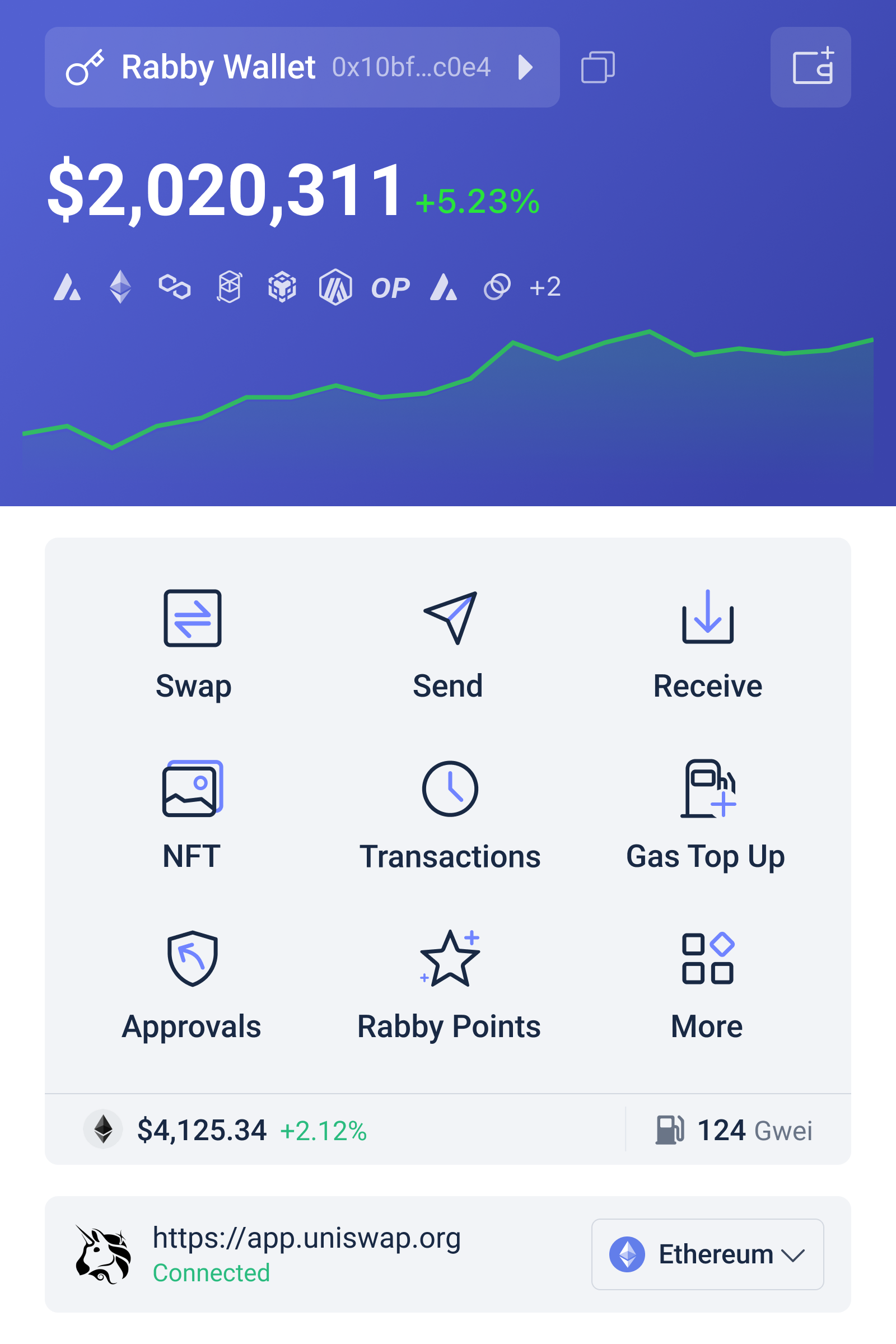
If you want to try a wallet that treats simulation and MEV seriously, give rabby wallet a look. It integrates simulation into the signing flow, surfaces alternate routes, and gives you a clearer picture of what you’re about to sign. I’m not endorsing blindly—test it, poke around, and see how the simulations match up with real trades—but in my experience it’s a practical step forward for power users and regular DeFi participants alike.
Also, a quick workflow tip: pair a simulation-forward wallet with periodic portfolio audits. Run a monthly review of realized slippage vs. market benchmarks and set rules for when to change routing defaults. That small discipline compounds.
FAQ
Q: Do simulations guarantee no MEV losses?
A: No. Simulations reduce risk but don’t eliminate it. They model likely outcomes given current mempool conditions and historical patterns, but block ordering can still change unexpectedly. Use simulations to inform decisions, not to promise perfection.
Q: Is transaction simulation slow or expensive?
A: Usually it’s fast and lightweight; many wallets run local or remote checks that add only seconds to your flow. There’s no direct cost to simulating, though some advanced privacy or batching services might have fees. Weigh the small time cost against potential fee savings—it’s worth it for the trades that matter.
Q: Can casual users benefit from these tools?
A: Absolutely. Even if you only swap occasionally, seeing realistic slippage and alternate routes prevents surprise fees. Make safety the default for everyday use—you’re protecting returns without adding complexity.


Leave A Comment